 +447413083355






























As per the SME digital adoption report, UK-based SMEs are looking to incorporate digital technologies to improve their operations. Founders and key stakeholders of these SMEs search for the best web application development services in the UK. The right web application can help businesses streamline workflows, connect existing systems, and adapt to changing customer and operational requirements.
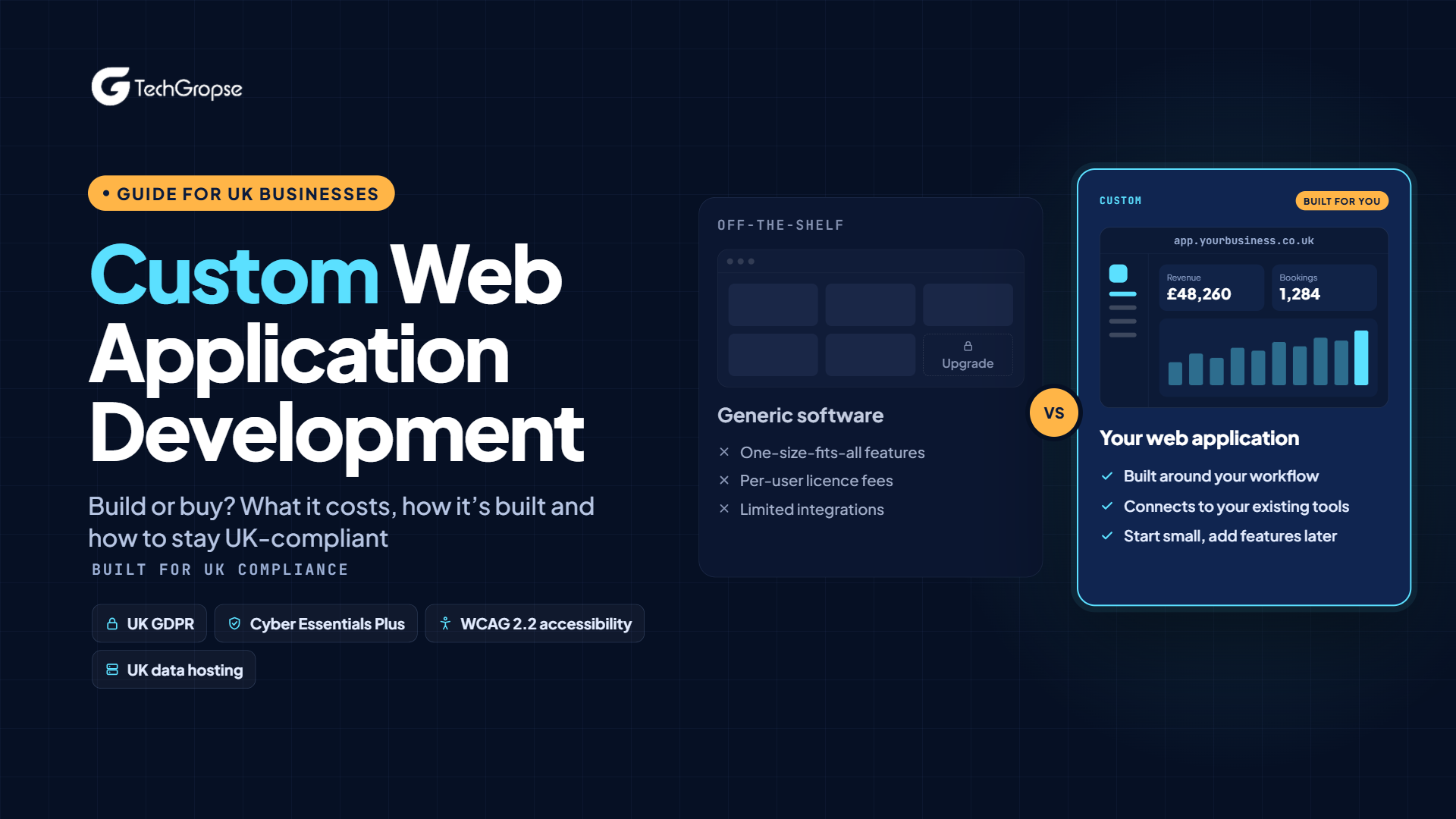
For some SMEs, the problem starts when teams rely on separate tools to manage orders, customer records, and daily operations. Switching between systems or working around features that do not fit existing processes can slow work down. A custom web application can bring these activities into one platform, with features built around how the SME operates rather than forcing teams to change their workflows to suit the software.
So, SMEs are looking for experienced web app development service providers? This guide will help them find the best one and choose the full-stack web app development company in the UK.
So, Let’s get started.
What Should You Consider Before Hiring a Web App Development Agency in the UK?
Before approaching agencies, identify what your business needs the application to accomplish and where existing tools fall short. A clear brief helps you compare proposals on technical fit, delivery expectations, and long-term value rather than price alone.
-
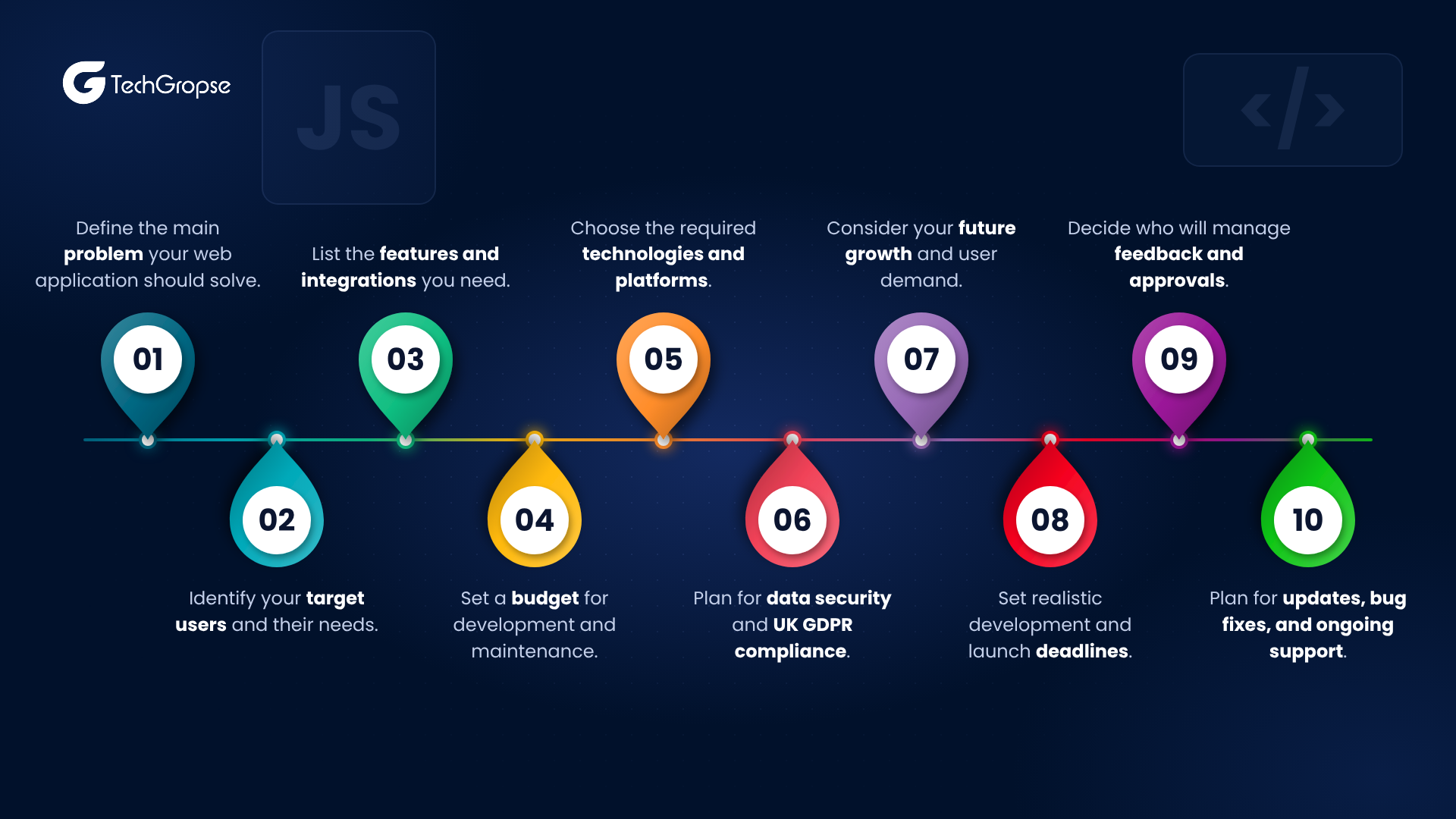
Define Your Core Business Problem
A web application should address a specific business issue, not simply move existing processes online. If your sales team tracks leads in spreadsheets while finance uses separate billing software, identify where information gets lost or work gets delayed before deciding what to build.
Write down the outcome you expect, such as reducing manual data entry, speeding up order processing, or giving customers real-time access to their accounts. This gives your development agency a clear starting point for defining features and measuring success.
-
Understand Your Target Audience
A web application designed for customers will have different requirements from one used by employees or business partners. For example, an online booking platform needs a straightforward reservation process, while an internal operations portal may require role-based dashboards and approval workflows.
Identify who will use the application, what they need to accomplish, and where they might struggle. These details help shape navigation, permissions, accessibility, and the overall user experience before development begins.
-
Prioritize Features and Integrations
Start by separating essential features from additions that can wait until a later release. An e-commerce web application, for instance, may need product listings, checkout, payment processing, and order tracking at launch, while advanced recommendation features can follow once customer behaviour becomes clearer.
List the systems your application must connect with, including payment gateways, CRM platforms, accounting tools, or inventory software. Missing an important integration during planning can lead to extra development work, unexpected costs, and delays closer to launch.
-
Set Your Development Budget
Your budget should cover more than the initial development quote. Hosting, domain services, third-party licences, security testing, ongoing maintenance, and future feature updates can all add to the cost of running a web application after launch.
Ask agencies to explain what their estimates include and which items may incur additional charges. A detailed breakdown of design, development, testing, deployment, and support makes proposals easier to compare and helps prevent budget surprises midway through the project.
-
Select the Right Tech Stack
The technology behind your application should reflect its actual workload, integrations, and maintenance requirements. A content-heavy business portal may work well with a conventional web stack, while a platform processing live transactions or complex datasets may require a different architecture.
Ask prospective agencies why they recommend a particular framework, database, or cloud platform. You should also consider who will maintain the code after launch, whether your team can access the source code, and how easily another development team could take over.
-
Secure Data and Ensure Compliance
If your application stores customer details, employee records, payment information, or business documents, security requirements need to be defined before development starts. Consider who can access each type of data, how accounts are authenticated, and what happens when an employee leaves or a user requests data deletion.
For UK businesses handling personal data, assess the relevant UK GDPR and Data Protection Act 2018 obligations. Ask agencies about encryption, access controls, backups, vulnerability testing, and incident response rather than relying on a general promise that the application will be secure.
-
Plan for Future Business Growth
An application that works for 200 users may struggle when thousands begin accessing it, particularly during busy periods. Think about expected traffic, transaction volumes, database growth, and whether new branches, product lines, or user groups will need access later.
You do not need to build every future feature immediately. Instead, discuss how the architecture can accommodate additional functionality, increased workloads, and new integrations without requiring an expensive rebuild when the business expands.
-
Set Realistic Project Milestones
A launch date means little without a clear understanding of what must happen before it. Requirements gathering, wireframes, interface design, development, integration testing, user acceptance testing, and deployment each need time, especially when several stakeholders must approve the work.
Ask the agency to provide milestones with defined deliverables and review periods. Agree on who approves designs, how scope changes will be handled, and what happens if an integration or third-party dependency causes a delay.
-
Assign Roles and Responsibilities
Web application projects often slow down when developers are waiting for decisions that nobody owns. Before signing a contract, appoint someone from your business to consolidate feedback, approve deliverables, provide access to existing systems, and answer questions about day-to-day operations.
Clarify the agency’s responsibilities as well, including who manages the project, makes technical decisions, performs testing, and communicates progress. Having named contacts on both sides reduces conflicting instructions and makes it easier to resolve issues before they affect delivery.
-
Prepare for Ongoing App Maintenance
Launching the application is not the end of the project. Software dependencies need updates, security vulnerabilities require attention, and changes to payment providers or connected business systems can affect functionality after the original development team has handed over the product.
Before hiring an agency, check what its maintenance agreement covers. Confirm response times for critical bugs, backup and recovery procedures, monitoring arrangements, support charges, and ownership of source code and documentation if you later move to another provider.
What Types of Web Application Development Companies Can You Hire in the UK?
A mistake that SME founders make is choosing a web application development company without knowing the type. There are 5 major types of UK web application service providers.
| Type | Strength | Cost in GBP |
|---|---|---|
| Freelance Contractor | 1 | £450–£650/Per Day |
| Specialized Web Studio | 5 to 25 | £25k–£100k |
| Mid-sized Company | 25 to 150 | £75k–£300k+ |
| Hybrid Company | 150 to 500 | £40k–£150k |
| Global IT Consultancy | 500+ | £150k+ |
Choosing a web application development provider in the UK starts with understanding what your project actually demands. A freelance contractor may be suitable for a small booking portal or an early-stage MVP, where decisions are quick, and the scope is limited. A specialized web studio is a stronger fit when the project needs focused UI/UX design, front-end development, and a defined set of features.
As requirements expand to include payment gateways, CRM integration, multiple user roles, or complex business workflows, a mid-sized development company can offer a broader team to manage these dependencies. The right choice depends less on the provider’s label and more on whether its team can handle your application’s technical complexity.
Checklist for Hiring a Web App Development Company in the UK
Use this checklist to assess a UK web app development company’s technical fit, delivery process, commercial terms, and ability to support your application after launch. Ask for evidence, named responsibilities, realistic milestones, and clear deliverables before comparing quotes or committing your budget to a UK development partner agency.
-
Review Relevant Project Experience
Check whether the agency has delivered applications with workflows similar to yours, rather than relying on an impressive portfolio alone. Look for evidence of its role, the technical challenges involved, and what was delivered.
Example: If you need a multi-vendor marketplace, ask to see a project involving vendor dashboards, commission calculations, payment processing, and order tracking. A collection of brochure websites would not demonstrate the same capabilities.
-
Identify Who Will Build Your App
Find out who will handle architecture, front-end development, back-end development, testing, and project management. Some agencies present senior specialists during sales discussions but assign much of the implementation to a different team.
Example: Request the proposed team’s roles and experience before signing. If your application needs complex API integrations, establish who will design those connections and who will troubleshoot failures.
-
Get a Detailed Scope of Work
A quote should explain what the agency will deliver, what is excluded, and how changes will affect the budget. Vague descriptions such as “complete web application” leave too much room for disagreements.
Example: For a booking platform, specify customer registration, availability calendars, booking confirmations, cancellation rules, and administrator controls. Ask the agency to identify which features are included in the initial release.
-
Compare Quotes Beyond the Headline Price
Two proposals may differ because one includes UX design, testing, deployment, and support while another covers development only. Review the payment schedule, assumptions, third-party charges, and rates for additional work before comparing totals.
Example: One agency quotes £30,000 including testing and deployment, while another quotes £25,000 but excludes these activities. Ask both to price the same scope so the comparison is meaningful.
-
Check Integration Capabilities
If your application must communicate with existing business software, confirm that the agency has experience with the relevant APIs, authentication methods, data formats, and failure-handling processes. Integration gaps can create more work than the interface itself.
Example: A UK retailer connecting its web app to an inventory platform needs accurate stock updates, order synchronisation, and clear handling of failed API requests. Ask how the agency would test these scenarios.
-
Verify Security and Data Protection Practices
Ask how the agency will manage access permissions, encryption, backups, vulnerability testing, and personal data. For applications handling UK residents’ personal information, clarify responsibilities under applicable data protection law rather than assuming the developer automatically guarantees compliance.
Example: A healthcare booking application may hold patient contact details and appointment records. Ask who can access production data, how backups are protected, and how a suspected data breach would be escalated.
-
Confirm Delivery Milestones and Dependencies
A launch date depends on more than coding speed. Design approvals, access to third-party systems, content delivery, testing, and stakeholder feedback can all affect the schedule. Ask how progress will be measured and delays communicated.
Example: For an app using an external payment provider, agree when sandbox access, payment testing, and production approval must happen. This helps prevent integration work from becoming a last-minute launch blocker.
-
Ask How Performance Will Be Tested
An application can work during a demonstration and still struggle with real traffic, large datasets, or simultaneous transactions. Discuss expected usage, response times, accessibility, browser compatibility, and load-testing requirements before development is complete.
Example: If a ticketing platform expects thousands of users when bookings open, ask how the agency will test concurrent sessions, prevent duplicate transactions, and monitor performance during peak demand.
-
Establish Ownership of Code and Accounts
Make sure the contract identifies who owns the deliverables and who controls the source code, cloud hosting, domain, repositories, and third-party accounts. Your business should understand how it can access these assets if the relationship ends.
Example: Require the production repository and cloud account to be accessible to your organisation, with documented deployment instructions. Clarify any licence restrictions affecting frameworks, paid libraries, or other components.
-
Agree on Post-Launch Support
Ask what happens when a release introduces a bug, a dependency needs updating, or a connected service changes its API. Establish support hours, response targets, maintenance fees, and the difference between warranty fixes and paid enhancements.
Example: A customer portal may need urgent attention if users cannot sign in after deployment. Agree on how critical incidents are reported, who investigates them, and what response time the support contract guarantees.
The Core Engagement Models: Project-Based, Dedicated Team, or Staff Augmentation?
The way you hire a web application development partner affects more than the initial quote; it determines how easily you can change priorities, manage delivery, and respond to customer feedback. Before comparing web application development services in the UK, decide whether your requirements are fixed, likely to evolve, or need continuous development support.
-
Fixed-Price Contracts for Clearly Defined Projects
A fixed-price contract works well when the scope is documented and unlikely to change significantly. For example, if you need an MVP with user registration, a booking calendar, payment integration, and an admin dashboard, the agency can estimate each milestone against agreed functional specifications. Payments can then be linked to deliverables such as approved designs, a tested booking flow, and deployment.
-
Time and Materials with Capped Sprint Budgets
Time and Materials (T&M) is often more suitable when the product needs to evolve through user testing. Rather than committing to every feature upfront, you pay for the team’s actual work while setting a spending limit for each sprint. This approach fits an agile software development lifecycle (SDLC), where feedback influences what gets built next.
-
Dedicated Product Teams for Continuous Development
A dedicated team or product pod gives your business ongoing access to a group of specialists, typically under a monthly commercial arrangement. Depending on the scope, the team may include a product manager, UI/UX designer, developers, and QA engineers. This model suits businesses that already have a product roadmap but lack the internal capacity to deliver it consistently.
Conclusion: How to Choose an Ideal Web App Development Company?
Choosing a development partner becomes easier when you know what your business needs, which provider fits your project, and how delivery will be managed. The right web application development services should address your current operational challenges without creating unnecessary complexity or costs as your business grows.
Before signing a contract, compare relevant project experience, technical expertise, pricing terms, and post-launch support. A well-defined scope and realistic expectations will help you select a UK development partner capable of turning your requirements into a reliable, maintainable web application.

Frequently Asked Questions
Pricing varies with the business problem being solved. A straightforward application with essential features may require £8,000–£30,000, while systems involving customer portals, payment gateways or business software integrations can cost £25,000–£100,000+. Request an itemised estimate covering development, testing, deployment and maintenance to understand the full financial commitment.
Think of a company website as its digital storefront and a web application as a tool customers or employees actively use. A website introduces your services, publishes information, and generates enquiries. A web app supports actions such as tracking deliveries, approving expenses, or managing bookings. Development requirements depend on whether your priority is visibility, functionality or both.
The timeline depends on how much needs to be built before the application is ready for real users. A narrowly scoped product may launch within 6–12 weeks, whereas a platform requiring multiple integrations, complex permissions or data migration may need several months. Early decisions on features, feedback and testing help prevent avoidable delays.
Code ownership should be settled before development begins, not negotiated during handover. Under UK copyright law, commissioning software does not automatically transfer copyright to the client. Include a written intellectual property assignment in the contract, specifying ownership of source code, bespoke designs and documentation. Also clarify licences for open-source libraries and pre-existing agency components.
Geographical distance is not the deciding risk; poor oversight is. Without agreed deliverables, accountable decision-makers and documented security requirements, a low-cost project can suffer from scope disputes, missed deadlines and difficult handovers. UK businesses should establish communication schedules, milestone approvals, data-protection obligations and code-access arrangements before work begins, regardless of the development team's location.

Saurabh Singh is a Senior Enterprise Content Writer at TechGropse, specializing in translating complex technologies into clear, insightful, and business-focused content. His expertise spans enterprise technology, software development, AI-driven solutions, and digital transformation, with a focus on connecting technical capabilities to real-world business objectives. He has contributed to content initiatives for TechGropse clients such as Home101, Artera, Peekabox, and Zayed University, bringing their products, services, and technological offerings to life through strategic storytelling. His work involves simplifying complex concepts, communicating software value propositions, and translating emerging technology trends into meaningful narratives for business leaders, decision-makers, and end users. Through a blend of technical understanding and business-oriented communication, he makes complex solutions accessible, relevant, and valuable to diverse audiences.